

The COVID-19 pandemic was the most significant global stress test of supply chains in recent history. It exposed structural weaknesses, accelerated transformation and forced trading organisations to rethink long-standing assumptions about efficiency, cost and flexibility.
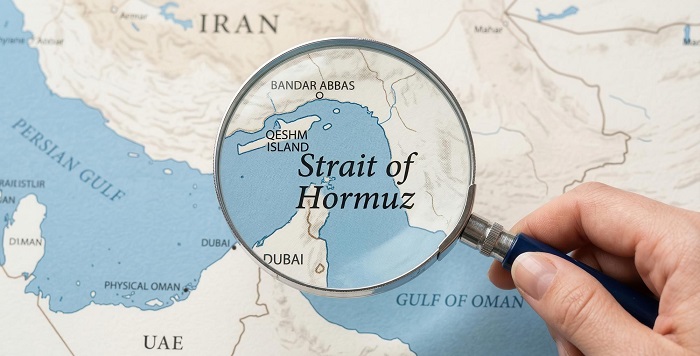
Now, as geopolitical tensions escalate - particularly with the Iran war and its associated energy and trade disruptions - the world finds itself navigating a second, quite different kind of shock. The key question is not whether supply chains will change again - they will - but how the lessons from COVID are now being applied in today’s environment of ongoing disruption.
During COVID, the immediate challenge was demand volatility coupled with supply disruption. Lockdowns halted production, ports became congested and transport networks faltered. In response, companies rapidly switched to e-commerce. Digital visibility tools were adopted at scale and businesses began prioritising flexibility over pure cost efficiency. In place of just-in-time supply chains, concepts such as buffer stock (just-in-case), supplier diversification and real-time tracking took centre stage.
And now, these lessons are being tested, and in many cases refined, in the context of geopolitical conflict and energy instability. Unlike the pandemic, which was primarily a health crisis with economic consequences, the Iran war introduces direct disruptions to energy markets, shipping routes and global trade corridors. Oil price volatility, in particular, has a cascading effect on logistics costs, manufacturing input prices and ultimately consumer markets. We are seeing this in South Africa at the moment with Transnet imposing immediate diesel surcharges.
One of the most notable carryovers from the COVID era is the shift toward flexibility as a core design principle. Previously, global supply chains had been optimised for cost, often relying heavily on single-source suppliers or long, complex international routes. What was once considered best practice - lean inventories, just-in-time delivery, single sourcing and extended global routes - was engineered to eliminate ‘waste’. Buffer stock was inefficient capital; dual sourcing was unnecessary duplication; geographic diversification a cost burden.
These models worked well during stable periods, but rested on a flawed assumption: that global trade flows would remain predictable. COVID shattered that assumption, revealing that the very features driving cost-efficiency were also what made supply chains catastrophically fragile.
The Iran war is reinforcing that lesson with fresh urgency, and supply chains that rebuilt on the same principles after COVID are once again exposed. In the current environment companies are doubling down on strategies such as nearshoring and regionalisation.
With oil markets under pressure, long-distance logistics become significantly more expensive and unpredictable. This is particularly acute for South African businesses, where long lead times amplify every disruption. As a result, there is a renewed emphasis on local and regional production hubs. For emerging markets such as South Africa, this presents both an opportunity and a risk. If supported by the right infrastructure and policy frameworks, shorter supply chains could encourage local manufacturing, reindustrialisation and reducing import dependency. However, this requires structural investment in both infrastructure and human capacity and will not happen overnight.
A major lesson from COVID that is now a necessity is the importance of real-time data and visibility. During the pandemic, companies that had access to accurate, timely information were better able to respond to disruptions. They could reroute shipments, adjust inventory levels and communicate effectively with customers. In the current volatile environment, this capability is even more critical.
The Iran war has reinforced this urgency in several important ways. First, the speed and unpredictability of geopolitical events - from port closures to airspace restrictions to sudden sanctions - means that supply chain teams need access to live intelligence, not weekly reports. Companies operating with real-time track-and-trace systems were able to identify stranded cargo within hours of the Gulf ports closing, while those relying on traditional reporting cycles took days to understand their exposure.
Rather than reacting to disruption, leading companies run continuous ‘what-if’ simulations across their networks, enabling faster and more confident decision-making when a crisis hits. The lesson is clear: visibility is not a technology project, it is a strategic imperative.
The unpredictability of geopolitical events – and often contradictory leadership announcements - means that static planning models are no longer sufficient. Instead, supply chains must be dynamic, data-driven, agile and capable of rapid adjustment.
Technology is central to this shift. The accelerated adoption of digital platforms, automation and analytics - initiated during COVID - is continuing, and in some cases intensifying.
However, this comes with a trade-off. As systems become more automated and decision-making increasingly data-driven, the demand for certain types of labour may decline. While new roles will emerge, particularly in technology and analytics, there is a real concern about job displacement, especially in regions where labour-intensive logistics has traditionally been a key employer.
Energy is another area where the intersection between COVID lessons and current geopolitical realities is particularly evident. The pandemic highlighted the vulnerability of global systems to sudden shocks. The Iran war reinforces the risks associated with dependence on fossil fuels, particularly oil. As a result, there is a growing push toward alternative energy sources within supply chains. This includes electrification of transport fleets, investment in renewable energy, and exploration of alternative fuels such as hydrogen.
For South Africa and other African markets, this transition presents both challenges and opportunities. On one hand, the capital investment required for new energy infrastructure can be significant. On the other, countries that are able to leapfrog older technologies and adopt cleaner, more efficient systems may gain a competitive edge. South Africa, with its renewable energy could position itself as a regional leader in this space, as Namibia has already done, provided that regulatory and infrastructural barriers are addressed.
Perhaps the most important overarching lesson is that disruption is no longer the exception - it is endemic. COVID was initially viewed as a once-in-a-generation event. However, the combination of pandemics, geopolitical tensions, climate-related disruptions and economic volatility suggests that supply chains must be designed for continuous uncertainty. This is the essence of the ‘shockwave economy’: a landscape defined by successive, overlapping disruptions rather than isolated crises.
In this environment, agility becomes as important as efficiency. Companies must be able to rapidly adapt, reconfigure networks and make decisions with incomplete information.
Collaboration, both within organisations and across supply chain partners, also becomes critical. No single entity can manage these complexities alone. For South African businesses specifically, this means investing not only in technology and infrastructure, but in talent - supply chain professionals who combine analytical capability with the judgement to act decisively under uncertainty.

Dr Ernst van Biljon, Head Lecturer, Supply Chain Management, IMM Graduate School