What happens when a company decides where to spend its money? It can determine which suppliers grow, which businesses gain access to opportunity, how resilient a supply chain becomes and, ultimately, how value moves through an economy.
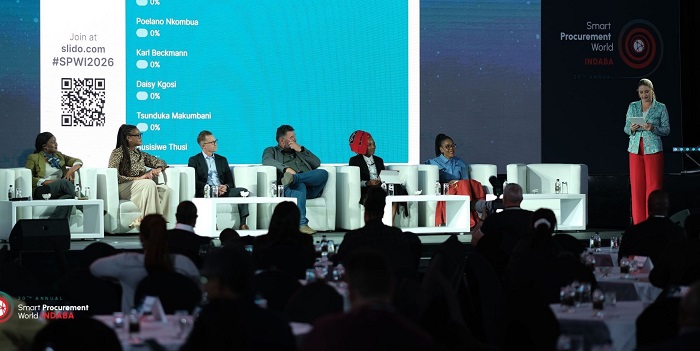
That was one of the powerful themes emerging from the 20th Smart Procurement World Indaba, where more than 3000 procurement professionals, business leaders, government representatives, SMME suppliers and decision-makers came together to explore the changing role of procurement in business and economic growth.
Under the theme “The People. The Platform. The Purpose.”, the milestone Indaba brought together voices from across the procurement and supply chain ecosystem to tackle some of the questions that matter most to organisations today: How do businesses remain resilient in uncertain markets? How can procurement unlock opportunities for suppliers? What role will AI play? And how can organisations use their purchasing power to create value beyond the bottom line?
For Smart Procurement, CEO Debbie Tagg, these conversations reflect a fundamental shift in how procurement is viewed. “Procurement touches every part of the economy. Behind every procurement decision is a supplier, a business, a job, a community and an opportunity. As the profession continues to evolve, we have a responsibility to look beyond transactions and ask what kind of value we are creating through the choices we make. That is what makes these conversations so important – procurement has the ability to influence not only business performance, but the resilience and growth of the economies in which we operate.”
From procurement spend to investment decisions
One of the Indaba's most compelling conversations placed the banking sector at the heart of the procurement and economic growth discussion.
The keynote panel, “Markets in Motion: The Investor’s View on Procurement and Economic Growth,” brought together leading voices from Absa, Coupa Software, Nedbank Corporate and Investment Banking (CIB), and Standard Bank to unpack the increasingly important relationship between procurement, investment and economic development.
For financial institutions, procurement decisions can provide a window into how businesses are managing risk, responding to disruption and positioning themselves for growth.
In an environment of shifting markets, constrained capital and heightened regulatory scrutiny, the panel explored how procurement and supply chain insights can influence capital allocation, strengthen business resilience and help identify new opportunities for growth across Africa.
Miyelani Maluleke, Senior Economist and Head of South Africa Macroeconomics Research at Absa Group, highlighted the broader economic environment shaping these decisions: “The outlook for the global economy is highly uncertain as geopolitical tensions disrupt trade flows and generate huge volatility in the prices of critical inputs, especially energy. For a small open economy such as South Africa, these global headwinds will transmit directly through higher input costs and inflation, creating pressure on the central bank to respond with higher rates. But while the external environment is clearly challenging at the moment, South Africa’s strong track record in executing reforms over the last few years is an important positive development that will help to build resilience and anchor the economy towards growth over the medium to long term.”
The conversation also highlighted something that businesses and suppliers are experiencing first-hand: resilience comes at a cost, but so does disruption.
Niron Rampersad, Divisional Executive: Trade at Nedbank Corporate and Investment Banking (CIB), said: “Procurement has become central to business resilience and growth. Companies are diversifying suppliers, carrying more inventory and building greater flexibility into working capital to protect continuity of supply. These choices strengthen businesses, support suppliers and create more resilient supply chains.”
His comments capture the changing reality facing organisations across the continent. Procurement teams are no longer simply negotiating prices and managing contracts; they are making decisions that can determine whether a business is able to keep operating when markets shift, suppliers face pressure or global disruptions reach local supply chains.
And when those decisions are made at scale, their impact extends well beyond individual companies. Procurement is increasingly becoming a catalyst for investment, a driver of competitive advantage and a powerful force in accelerating national and continental growth.
The people behind the biggest spend
If the banking panel explored procurement through the lens of investment, “The Final Word: The Titans of Spend” brought the conversation directly to the executives making some of South Africa's biggest procurement decisions.
The closing session brought together senior leaders from Sasol, MTN, Valterra Platinum, Afrimat, AECI and Coca-Cola Beverages South Africa for an open conversation about what really matters when billions of rands move through procurement and supply chains.
The discussion covered supplier development, artificial intelligence, resilience, procurement spend and economic growth, but at its heart was a more fundamental question: What responsibility comes with having significant purchasing power?
For large organisations, procurement decisions have a ripple effect.
They influence which suppliers receive opportunities, how local supply ecosystems develop, how businesses prepare for disruption and how organisations balance commercial priorities with the need to build sustainable, resilient value chains.
The session offered an important reminder that procurement leaders are not simply managing spend; they are managing relationships, risk, opportunity and impact.
As Smart Procurement World celebrated its 20th Indaba, the event provided an important moment for the industry to reflect on how far procurement has come and the role it must play in the future.
More than 600 people gathered not simply to talk about procurement, but to understand what it means in a world where businesses are navigating economic uncertainty, technological change, supply chain disruption and increasing pressure to create meaningful value.
The Indaba's theme, “The People. The Platform. The Purpose.”, speaks directly to this evolution.
The People are the procurement professionals, suppliers, business leaders and decision-makers who connect, collaborate, challenge and inspire. The Platform is the ecosystem that connects businesses, ideas, technology and opportunity, and the Purpose is the impact those connections and decisions can have on businesses, suppliers and economies.
Over two decades, the Smart Procurement World Indaba has created a space for these conversations to take place. The 20th edition demonstrated that the conversation has grown considerably from procurement as a business function to procurement as a strategic force with implications for investment, resilience, supplier development and economic growth.
As the curtain falls on the 20th Smart Procurement World Indaba, one message resonates strongly across the discussions:
The future of procurement will not be defined solely by how organisations spend, but by the value, opportunity and economic impact that spending creates.
Because behind every purchase order is a decision and behind every decision is an opportunity to shape what comes next.