Right now, the transport and shipping narrative for South Africa centres on renewal and revitalisation. And for good reason. In 2025, Transport Minister Barbara Creecy announced six new targets that would guide the department in its efforts to improve passenger, freight and logistics systems.
These targets include carrying 250 million tonnes of freight on the Transnet network by 2029 and improving ship loading and unloading speeds to meet the international benchmark of 30 gross crane moves per hour.
Additionally, the National Treasury raised R11.8 billion through South Africa’s first Infrastructure and Development Finance Bond, part of a broader budget plan to allocate R1 trillion to public infrastructure over the next three years.
These are all positive signs that reflect a growing dedication to transforming what is, without exaggeration, one of South Africa’s most critical sectors. As the country works to address years of infrastructure decay and other longstanding challenges, logistics is benefiting from funding and public-private collaboration that enables development and, subsequently, nationwide economic growth.
It takes many hands to rebuild and strengthen South Africa’s supply chains. By investing strategically, eliminating bottlenecks and capitalising on new opportunities, we lay the groundwork for positive change.
Private investment changes the game
Logistics sets the pace at which South Africa can move, trade and grow. The nation’s freight and logistics market is expected to reach nearly $20 billion by 2030, growing at a CAGR of 6.24% and underscoring its role in driving economic activity and national development.
That said, sector reform still has a long way to go. While freight along Africa’s biggest railway system has improved, that system continues to face challenges such as equipment shortages and maintenance backlogs. The Port of Durban, the largest and busiest shipping terminal in Sub-Saharan Africa, occupied last place on the World Bank Container Port Index for 2024, though progress has been made in improving operational and capacity-related challenges.
What is common across all reform efforts is the input and attention of the private sector. In December 2025, South Africa received its largest-ever private rail investment valued at R3.4 billion, the result of Transnet opening the national network to private operators. Around the same time, Transnet also signed South Africa’s first port-privatisation deal, which will increase the capacity of the Port of Durban’s Container Terminal Pier 2, reduce costs and improve service quality.
Private capital has come to the table, ready and willing to fund the infrastructure and expansion plans that are critical for South Africa’s long-term growth prospects. The result is projects and developments that strengthen national capacity.
Inland ports: Precincts filled with opportunity
Part of reforming logistics is not only strengthening and decongesting freight corridors but also developing infrastructure and inland ports that host integrated road and rail logistics, industrial manufacturing and warehousing. This enables the sector to play a greater role in macroeconomic development, creating job opportunities and offering long-term benefits that support an optimised transport network.
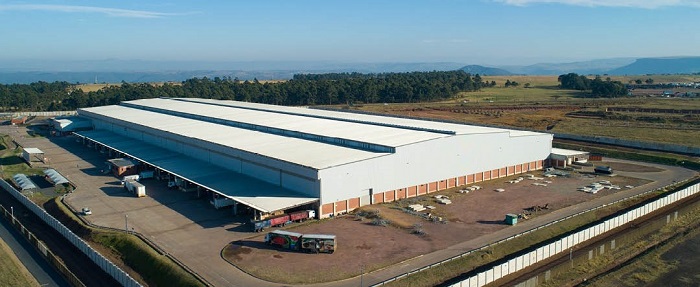
One of the leading examples of private funding propelling South Africa’s logistics push centres around Cato Ridge, the country’s first large-scale, privately funded freight-corridor development. Located just 52 kilometres from the Port of Durban, the development is home to the recently launched Insimbi Ridge Logistics Precinct, which introduces new inland staging and intermodal capacity and forms part of the KwaZulu-Natal provincial government’s plans to integrate private investment into critical infrastructure.
Occupying 500 hectares of developable land, Cato Ridge is a next-generation hub and essential node in the KZN-Gauteng freight corridor, which itself is critical for getting goods from the Port of Durban up to Johannesburg and throughout the country. The properties offer practical features such as large yard spaces and scalability for multi-tenant occupation, which are essential across all industries like FMCG and e-commerce.
Thanks to the level of integration, every building and facility in the precinct serves as a strategic business asset, a cog in a well-oiled machine that enables individual enterprises and local and provincial economies to grow. With every container that passes through Cato Ridge and every item that is dispatched to its destination, South Africa takes a step further in rebuilding trust and confidence in its ability to move people and goods.
The future of SA logistics is reliable, efficient and scalable
From a property perspective, the success of precinct developments like Cato Ridge depends on their ability to effectively support role-players in the material handling and merchant space. Functional, secure and efficient warehouse facilities in close proximity to port infrastructure have proven to be an intrinsic element in the value chain.
Located along Eddie Hagan Drive close to the N3 highway, one of South Africa’s most critical arterial routes, Cato Ridge DC meets a wide spectrum of supply chain requirements. The 50,333sqm cross-docked modern logistics fulfilment centre competes with newly developed warehouses at every level and is one of Redefine’s national network of industrial properties, bringing to market spaces that support growing public and private capital investments and integrate with national road and rail freight networks.
It is inspiring to witness how South Africa’s Department of Transport, and the nation at large, continues to spearhead the transformation of national infrastructure throughout 2026. By prioritizing the development of world-class facilities, we are actively building a more prosperous future

Johann Nell, Head of Development & National Asset Manager at Redefine Properties