
South African solution provider CtrlFleet has reached a significant milestone in its product journey with the launch of its first fuel network integration, a step that signals a broader shift in how transport operators manage one of their most critical cost drivers.
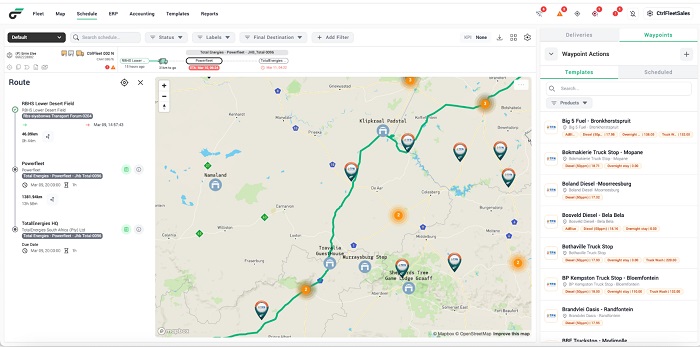
Fuel has traditionally sat outside of the core transport management system (TMS). Managed in separate platforms, reconciled after the fact, and disconnected from the execution of a trip, it has long created operational blind spots for carriers.
By bringing fuel into the same environment where operators already plan, execute, and monitor their operations, CtrlFleet is closing a long-standing gap in the transport technology stack. Operators no longer need to move between systems to manage routes, track vehicles, and control fuel spend. Instead, these elements now sit together, connected, visible, and actionable in real time.
For most transport businesses, the TMS is where the majority of operational time is spent. It is the control layer of the business. Yet fuel, despite being one of the largest and most volatile costs, has remained outside of that control layer, until now. “This is not just about fuel,” says Renko Bergh, co-founder of CtrlFleet. “It’s about reducing fragmentation in the way transport operations are managed. Every time an operator has to switch systems, reconcile data manually, or wait for delayed information, it creates friction. Our focus is to remove that friction by connecting the critical parts of the operation into one environment.”
The integration reflects CtrlFleet’s broader product philosophy: to become the preferred platform for road freight carriers by unifying the systems that drive daily operations. Scheduling, tracking, compliance, financial controls and now fuel.
While TFN marks the first fuel network integration on the platform, CtrlFleet has confirmed that this is the first of multiple integrations to follow, forming part of a wider strategy to expand its ecosystem and deepen operational connectivity for transporters.
The result is a more streamlined workflow, improved visibility, and greater control, enabling operators to move from reactive management to proactive decision-making. As the transport industry continues to digitise, the ability to connect previously siloed systems will become a defining factor in operational performance.