Many companies believe they are market orientated. In reality, they are simply polite. Ask almost any leadership team how market or customer orientated they are, and you’ll hear the same answer: “Very.” But in practice, many organisations are not market orientated - they are simply polite and professional to their customers.
They respond to queries within SLA. They run surveys that ask, “How happy are you with our service?” and “How likely are you to recommend us?” And this creates the false impression of closeness with the customer. But sincere market orientation sits elsewhere. It sits much deeper.
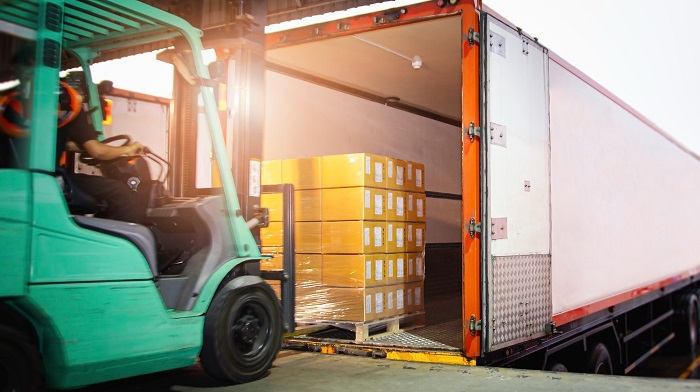
It shows up when executives spend time in the environments where their product actually lands - getting into delivery trucks, standing in receiving areas, working in stores, and seeing the operation under real conditions. It shows up when those with the most influence in the organisation do not spend the least amount of time with customers.
It took a day on a delivery truck to realise we were optimising the wrong things
When I was the warehouse executive at one of the largest FMCG businesses in South Africa, the first time I got onto a delivery vehicle, I learnt more about our customers and how our business really worked than I had from inside the operation.
We delivered to 23 customers that day: petrol forecourts, restaurants, and independent wholesalers. By the time we arrived, their day was already underway. Multiple suppliers were competing for attention. Receiving staff were juggling deliveries, paperwork, and interruptions.
And then I saw what our operation looked like from their side: Picking products at random onto a pallet - efficient in the warehouse - made the receiving process significantly longer. The pallet had to be unpacked, counted, interrupted, and counted again. Product descriptions on our delivery notes didn’t match the ones on their systems, creating confusion and rework, while the lack of system integration made even simple transactions cumbersome.
None of this showed up in our internal metrics. We were confidently managing a system we didn’t fully understand.
Once that realisation hit, the question became how to translate the need for change across the organisation. You cannot ask a picker to merely “think about the customer” and expect behaviour to change. But you can define what a perfect load looks like for the very next step in the value chain - the delivery driver: layer picking, stable, easy-to-count pallets and the correct loading sequence. That’s something they can act on.
If you set the driver up for a perfect day, the spillover is a smoother delivery and, ultimately, a happier customer. That clarity changes behaviour and improves the experience all the way through the system. In the warehouse, we captured this in a simple mantra: “The driver is king.” Because when the drivers are set up to succeed, they can deliver on the broader promise that the customer is king.
Your lack of Market Orientation is quietly costing you money every single day
The consequences show up in three places:
The first is inefficiency: When organisations are designed function by function, each department optimises for its own performance. One department avoids a cost, only for a larger cost to appear elsewhere. You see it in the daily “making a plan” moments - a missed delivery rushed out, a half-pallet sent on a 12-ton vehicle, overtime and rework becoming normal. These are not isolated issues. They are the cost of a system not engineered backwards, starting with the customer’s reality and working its way up the value chain.
The second is lost sales: Customers rarely leave immediately. They adjust. They order less. They reduce their reliance on you. They keep you as a secondary supplier. Over time, this shows up as missed orders, lower share of wallet, and eventually, churn.
The third is missed opportunity: When you understand your customer properly, you start to see where you can do more - what else they need, where your offer doesn’t quite fit, and where small changes unlock value. As Seth Godin puts it, the opportunity is to “find products for your customers”, not just customers for your products.

If your call centre is treated as a cost centre, you are not as market orientated as you think
If you want to understand how market orientated your organisation really is, look at how you treat your call centre. Often it is positioned as a cost centre and measured on speed – how quickly calls are handled and how fast customers are moved off the line. Agents are pushed to get through more volume in a day, while depth of resolution is barely measured beyond the occasional - and often ignored - “please rate the quality of this call.”
But this is one of the few places where your customer tells you - directly - what it is like to deal with you.
If the person answering that call has never seen a delivery being received, never stood in a backroom, never experienced the friction themselves, they can only respond at surface level. They can log the issue, apologise, and escalate it - but they cannot truly understand it.
Most organisations try to resolve complaints quickly. Market-orientated organisations try to understand why they exist. The organisation operates with a simple philosophy: every customer complaint is a gift - one that shows us where to improve, in ways we would otherwise not see.
If you don’t understand your customer deeply, your marketing will fail - and your pricing will suffer
When you truly understand your customer’s world, you begin to articulate your value differently. This is what I referred to in a previous article as the Value Translation Gap - the gap between the value you deliver and the value your customer recognises, remembers, and is willing to pay for.
Seen from the inside, your business is about products and processes. Seen from the customer’s side, it is about time saved, frustration removed, and an operation that works. Until then, you are describing your business in your language - not your customer’s.
When you close that gap, your marketing changes. You speak your customer’s language. You describe what matters to them. You differentiate naturally and reduce the risk of commoditisation.
True Market Orientation is not something you declare
It is something you design - deliberately, into every area of your organisation. And when you do, the market responds accordingly.
This is the second article in a series by Yolandi - for the first article, diving into the value translation gap - visit https://logisticsnews.co.za/Articles/the-real-job-your-customer-is-hiring-you-to-do

Yolandi Mitchell, Mondegreen
Linkedin: https://www.linkedin.com/in/yolandi-mitchell-60a284334/