

Many businesses are trying to save money by negotiating harder, delaying purchases, or sweating existing assets. In fleet operations, one of the biggest savings may be hidden in the cost of vehicles already on the road.
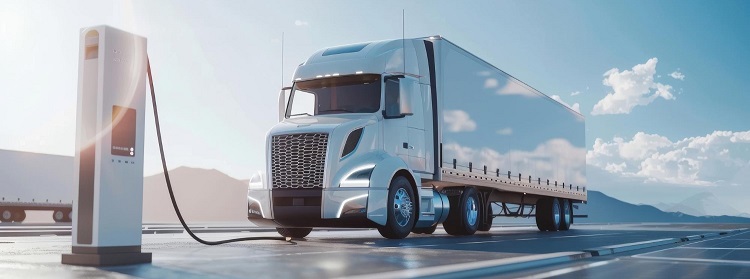
For years, electric vehicles (EVs) were spoken about mainly as a sustainability decision. Today, that has become too limiting. On the right routes, electric mobility can reduce long-term fleet costs, improve emissions performance, and make a business more competitive by making the cost base easier to forecast.
The vehicle price is not the cost
The mistake many businesses make is comparing the purchase price of a combustion vehicle to that of an EV. That is only the first number.
While a combustion vehicle may be cheaper to buy, fuel, maintenance, servicing, downtime, and residual value all influence the real cost over its working life. In a commercial fleet, especially one doing predictable urban work, those running costs can outweigh the initial capital saving.
In one Everlectric model comparing the outright purchase of a Maxus eDeliver 75, including charger and installation, with a comparable four-tonne internal combustion vehicle, the EV has a higher upfront capital cost. Once operating costs, insurance, maintenance, energy costs, and residual values are factored in, the model shows savings of more than R600,000 over five years. This assumes a 30% residual value and 5,000km per month, or about 192km per day. Under the same utilisation profile, the savings can exceed R1 million over seven years.
While each fleet will have different usage patterns, the calculation shows why comparing vehicle price alone is no longer enough. The real comparison is between the full cost of owning and operating an EV and the full cost of keeping a comparable combustion vehicle in service.
The hidden cost sits in daily running
The biggest hidden cost is often fuel exposure. Diesel prices move for reasons unrelated to a delivery business, including oil markets, exchange rates, supply shocks, and geopolitical events. A fleet operator may budget carefully, but costs can still work against them.
Maintenance is another overlooked area. EVs have fewer moving parts and lower routine servicing requirements, which can reduce workshop time and running costs. For high-use vehicles, those smaller differences add up month after month.
This is where the route profile becomes critical. A truck doing repeat deliveries around Johannesburg should not be assessed in the same way as a vehicle running long-distance freight to Cape Town. If the route is predictable, the mileage is high, and the vehicle returns to base, the EV case becomes much easier to test.
Choose the right ownership model
The higher upfront cost still makes many businesses hesitate, even when the long-term total cost-of-ownership case is strong. That does not mean the EV case falls away. It means the ownership model needs to fit the business.
Some operators may prefer to purchase EVs outright, especially where they have the capital available and want to own the asset. Others may be better suited to an EV rental or EV-as-a-Service model, in which the vehicle, charging infrastructure, maintenance, telematics, and operational support are provided through a managed service.
The starting point is to assess the fleet requirements, route profile, charging access, vehicle utilisation, and financial priorities, then recommend the model that best fits the operation. For one business, that may be outright purchase. For another, it may be EVaaS. For others, it may be a phased approach that starts with the routes where the numbers already work.
That also makes the sustainability benefit easier to unlock. Lower emissions are not sitting separately from the financial case. In the right use case, the same operational decision can reduce costs, improve reporting, and support customer or supply-chain expectations.
Run the numbers honestly
The calculation must still be realistic. Savings depend on mileage, payload, charging cost, diesel price, maintenance, residual value, term, and how the vehicle is used. Change the assumptions and the number changes.
That is why businesses do not need another generic EV argument. They need to test the numbers against their own fleet: the vehicles they run, the routes they cover, the kilometres they travel, the fuel they burn, and the charging access they have. For suitable commercial routes within the vehicle’s daily range, the issue is becoming harder to avoid. The cost of staying with combustion may now exceed the perceived risk of moving.

Wesley van der Walt, CFO and Co-Founder of Everlectric