
Traxtion has committed approximately R1.5 million in 2026 to two skills development initiatives designed to strengthen long-term capacity within South Africa’s rail and logistics sector, while contributing to more inclusive and sustainable communities.
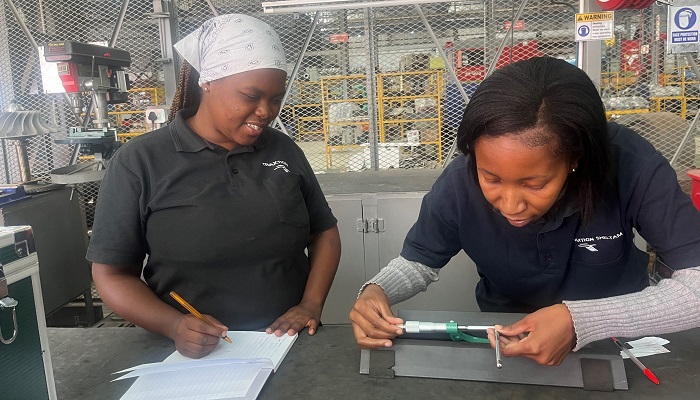
Through its TraxWagon Bursary Programme and Disability Learnership Programme, the company is investing in widening access to technical and practical skills, recognising that sector growth depends not only on infrastructure and equipment but also on people who can sustain, operate, and expand them.
Across the rail and logistics environment, skills shortages remain a persistent constraint. As sector activity increases and operational demands grow, the sustainability of recovery will depend on rebuilding human capital alongside physical assets. Traxtion’s approach is therefore focused on strengthening the pipeline at multiple levels, from formal tertiary education to community-based vocational training.
Building long-term sector capability
This year, Traxtion awarded 13 bursaries across engineering and logistics-related disciplines. There has been a deliberate focus on increasing female participation in technical fields with 11 of the recipients women.
The intake is weighted towards engineering, reflecting ongoing technical skills pressures within rail. The balance spans supply chain management, warehouse and inventory management, and transport and logistics. Together, these disciplines form the operational backbone that enables freight to move reliably and safely.
Approximately R700,000 has been allocated to the current bursary cohort. While two engineering students from the 2025 cohort transitioned into Traxtion’s apprenticeship programme from 1 March, the bursary initiative is not structured as a guaranteed internal recruitment pipeline. Instead, it is designed to strengthen the broader industry skills base, contributing to long-term sector resilience.
Expanding inclusion beyond traditional pathways
In parallel, Traxtion has invested approximately R810,000 in a 12-month Disability Learnership Programme.
Ten learners – 80% of whom are female and all of whom are individuals living with disabilities – are participating in an AgriSETA-accredited National Certificate in Plant Production, delivered in communities north of Pretoria, including Garankuwa, Mmakau, and Soshanguve. The programme combines 30% theory and 70% practical training, with support for soft skills and entrepreneurship development. Each learner receives a monthly stipend of approximately R4,500, with funding allocated to both training delivery and institutional support.
By focusing on plant production and entrepreneurial capability rather than purely administrative roles often associated with disability learnerships, the programme supports food security, local enterprise development, and income generation.
“Skills investment must translate into real opportunity,” says Nnoni Mohlaphuli, Brand, Communications and Marketing Manager at Traxtion. “If we want the rail and logistics sector to remain viable, we need to widen access, strengthen technical capability, and support communities in ways that produce lasting outcomes.”
Absorption from previous cohorts of the Disability Learnership Programme has exceeded 50%, demonstrating that the initiative delivers employment and enterprise outcomes, not only qualifications. In communities where formal opportunities remain constrained, the progression from training to income is what turns skills development into sustainable impact.