
Warehouse automation is no longer a concept confined to forward-looking strategy decks. It is increasingly becoming a practical response to mounting operational pressure, as supply chains grow more complex and customer expectations continue to tighten.
The global warehouse automation market is growing at more than 10% per year and is projected to reach nearly $60 billion by 2030, reflecting the scale and urgency of this shift.
Across the logistics sector, warehouses are being asked to do more than ever before. The steady rise of e-commerce and omnichannel retail has driven up order volumes, where same-day or next-day fulfilment is often expected rather than exceptional. At the same time, labour constraints make it difficult to scale operations using traditional, manual processes. The result is a convergence of pressures that many facilities were not originally designed to handle. Despite this momentum, adoption remains uneven, with an estimated 80% of warehouses globally still operating with little to no automation.
In this environment, inefficiencies that might once have been manageable can quickly escalate. Picking errors, delays in processing, and poor use of available space all contribute to bottlenecks that ripple across the wider supply chain. As volumes increase, so too does the risk associated with manual handling, both in terms of safety and operational consistency.
Automation is emerging as a measured and increasingly accessible way to address these challenges. Rather than representing a wholesale shift to fully autonomous warehouses, many organisations are adopting targeted technologies that address specific pressure points. Automated storage and retrieval systems, conveyor networks, robotic picking solutions, and warehouse management systems are being introduced with a clear operational purpose: to improve speed, accuracy, and reliability. In highly automated environments, accuracy rates can approach 99%, significantly reducing errors and improving overall service levels.
What has shifted in recent years is the scalability of these solutions. Businesses are no longer required to commit to large, all-encompassing transformations from the outset. Instead, automation can be implemented incrementally, beginning with high-impact areas such as sorting or picking, and expanding over time as operational needs evolve. This approach has opened the door for mid-sized operations to adopt technologies that were once the preserve of larger enterprises.
Phased approach at City Logistics
City Logistics is among the companies applying this phased approach within its own network. The group has extended its automation capabilities across multiple sites, including facilities in Durban, Cape Town, and Johannesburg, while a large-scale sorting project in Johannesburg is also underway. These investments form part of a broader effort to modernise its distribution centre operations.
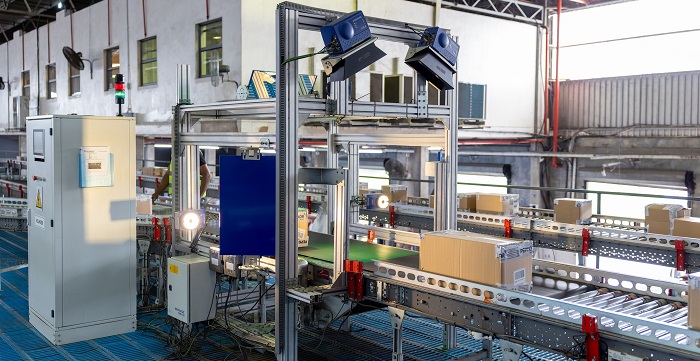
The upcoming upgrades will centre on advanced automation and conveyor systems designed to improve throughput and accuracy. The intention is to process higher volumes more efficiently, reduce reliance on manual handling, and support both retail and e-commerce fulfilment from the same operational base. The integration of intelligent sorting and real-time tracking is expected to play a key role in maintaining steady inventory flow and consistent service levels.
Improvements like these aren’t limited to a single operator; they’re reshaping the entire industry. Automation is making a tangible difference, from faster processing that keeps pace with growing demand to greater accuracy that reduces picking, sorting and fulfilment errors before they reach the customer. That, in turn, lowers the cost and reputation risk associated with returns.
It also allows us to make smarter use of vertical space, increasing capacity without expanding our footprint. Perhaps most importantly, it reduces our reliance on fluctuating labour availability, giving operations a level of resilience that simply isn’t possible with manual processes alone.
The human dimension of this shift remains an important consideration. While automation is often associated with job displacement, in practice, it tends to reshape rather than eliminate roles. Repetitive and physically demanding tasks are reduced, allowing employees to move into positions that involve oversight, system management, and problem-solving. This transition can improve both safety and job satisfaction, provided that organisations invest in the necessary training and upskilling to support their workforce.
As more companies follow this path, the role of the warehouse within the broader business is being redefined. Once viewed primarily as a back-end function, it is increasingly recognised as a central driver of performance and customer experience. Automation, when applied thoughtfully, allows businesses to scale with greater confidence and respond more effectively to shifts in demand.
The question for many organisations is no longer whether automation will play a role in their operations, but how quickly and effectively it can be integrated. In a landscape defined by rising expectations and constrained resources, the ability to turn warehouses into efficient, adaptable, and resilient hubs may prove to be a decisive advantage.

Ryan Gaines, CEO, City Logistics