
Four months ago, the fourth edition of the Metropolitan Collective Shapers (MCS) youth entrepreneurs’ programme was the first to be implemented nationwide, with a specific focus on the logistics and agricultural sectors, chosen for having the greatest potential for job creation.
These two critical sectors are important for South Africa’s economic future and whose stability shapes the country’s long-term prospects. Logistics, which contributes 10% to 12% of GDP, moves the goods that keep the economy functioning, though inefficiencies continue to undermine its competitiveness.
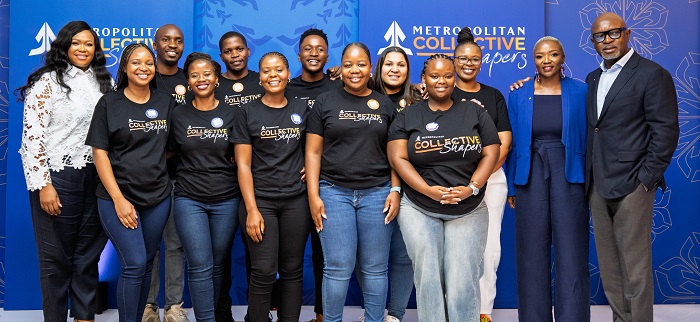
Drawn from a total of 373 national entries, the top ten finalists have been announced.
The MCS programme seeks to empower small business owners, assisting them to become leaders whose success will ultimately have a direct impact on their communities. Qualifying criteria for entry included an age restriction of business owners between 18 and 35 who reside permanently in South Africa. Their businesses had to be 100% youth owned by historically disadvantaged or disabled persons and had to have been operational for not less than 12 months.
During the first month of the programme, all selected participants took part in a series of online soft skills training sessions, designed to build resilience and leadership. The second phase saw 20 finalists progress to a further four weeks of sector specific training, and phase 3 was the selection of the top 10.
Collective Shapers focuses on small business development, meaning that all 150 of the young entrepreneurs that entered the programme retain access to Metropolitan’s online resources, networks and ongoing support – ensuring the journey doesn’t end at the programme’s close in February 2026.
Through the programme, the top 10 gain access to personal branding and leadership training, business coaching designed to turn plans into profits, market access and national exposure, mentorship from industry experts, and opportunities to network with other like-minded entrepreneurs, all aimed at supporting the growth and long-term sustainability of the selected small businesses.
The top 10 participants have been selected to receive a range of prizes, including a cash injection, media training, branding, enhanced business visibility, and membership to the MyDough platform, which unlocks market access opportunities.
Of the ten finalists, the following four logistics businesses were selected:
Approved Mache – TAP Group (Pty) Ltd, WC
With bases in Cape Town and Pretoria, TAP Group is a road freight logistics company specialising in long-distance transportation of palletised goods using superlink tautliners. Approved is from an entrepreneurial family, but qualified as a Professional Engineering Technologist, before starting his own business. Through TAP, he aims to build generational wealth and change the story of where he came from.
Thobani Zungu - NGI4 Xpress, KZN
Based in Durban, NGI4 Xpress provides express courier services, last-mile delivery, and business-to-business (B2B) logistics support. Thobani was inspired by a gap in the logistics industry where businesses were looking for a delivery partner that was consistent, transparent, and committed. Thobani is building a company that solves real problems, creates opportunities, and delivers a high standard of service. His dream is to make NGI4 Xpress one of the leading black-owned logistics companies in Africa.
Mikhaela Brown - K2020714247 South Africa, WC, Cape Town
Mikhaela’s logistics business grew out of her desire for greater financial independence and the necessity of providing support to her mother during her recovery from a motorcycle accident. The company operates nationally and internationally, specialising in air, road and sea freight, providing local, export and import services. Mikhaela’s dream is to build a holistic ecosystem that not only offers services but also actively invests in the community that fuels it.
Siphesihle Sangweni - Kate-Mkhipheni (Pty) Ltd, KZN, Mtubaba
Kate-Mkhipheni Pty Ltd transports raw materials including coal, chrome and anthracite, targeting clients in mining and construction. Siphesihle has been running her business since she was in matric and shares her directorship of the company with her two siblings. Based in Mtubatuba, the business has always hired young community members who are certified professionals - from drivers to mechanics - but who are unemployed. Siphesihle aims to empower other young people to start their businesses, contributing to the country’s economy.
This phase marks the final stage of the programme, with the ten finalists moving forward after what has already been a transformative experience for many in what has already been a transformative experience for many. Thobani Zungu said of his journey thus far, “I have learned that sustainable growth comes from structure, planning, and clarity - not just effort. I also learned the value of community, partnering, collaborating, and that asking for help accelerates progress.”
Metropolitan’s Chief Marketing Officer, Lindiwe Gumede said, “The Metropolitan brand is all about the power of the collective and about being an impactful member of the communities we serve. This programme is a manifestation and commitment to those values.”
She added: “When entrepreneurs change what’s possible for themselves, they rewrite what’s possible for everyone who comes after them. The true impact is not only what they achieve today, but the legacies they are rewriting in real time. We wish the ten finalists’ good luck in this final stage of the competition.”