
Exporters Western Cape welcomed Minister of Transport Barbara Creecy to Cape Town this week for a keynote address outlining government's plans to reform South Africa's freight logistics system and improve the efficiency of the country's rail and port infrastructure.
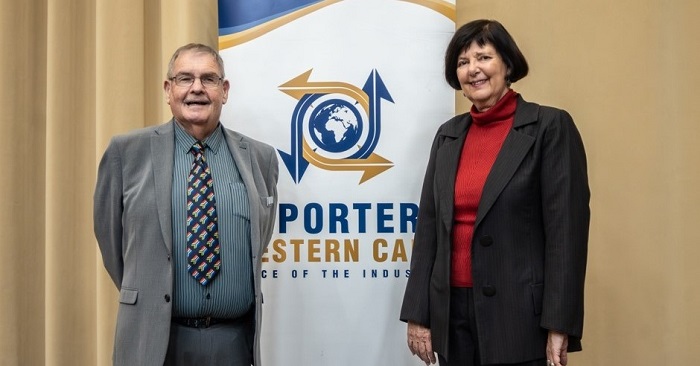
Picture: Terry Gale, Chairman Exporters Western Cape, and Barbara Creecy, Minister of Transport.
Addressing a full audience of exporters, logistics stakeholders and industry leaders, Creecy said private rail operators were expected to begin operating on South Africa's freight rail network from April next year as government accelerates reforms aimed at restoring rail volumes and improving the country's logistics competitiveness.
"The lifeblood of any country's economy is the logistics system," she said. "If we are going to be able to get South Africa's produce out to the world, then it is important that we have an efficient and cost-effective logistics system."
Exporters Western Cape chairman Terry Gale said the organisation was honoured to host the Minister and provide members with direct insight into government policy and reform initiatives affecting the freight and logistics sector.
"Exporters Western Cape has consistently advocated for greater engagement between industry and government. Having Minister Creecy address our members is a significant opportunity for exporters to better understand the reforms underway and what they mean for the future competitiveness of South Africa's logistics system. Reliable and efficient logistics are critical to growing exports and strengthening South Africa's position in global markets," said Gale.
Creecy acknowledged that South Africa's logistics network had faced significant challenges in recent years, particularly following the Covid-19 pandemic, while also noting increasing competition from regional ports. "Once upon a time South Africa's ports and rail system were the only option available to exporters. Today we have competitors, whether it is Maputo, Walvis Bay or many other ports to the north of us. Complacency is not going to assist us in this context," she said.
The Minister said significant progress had been made since the adoption of the National Freight Logistics Roadmap in 2023, including the introduction of Transnet's first network statement, the opening of rail operations to private operators and the establishment of the Transnet Infrastructure Manager.
"We have also set up the Transport Economic Regulator and are hoping to see the President promulgate the regulations so that we can appoint a CEO as soon as possible."
According to Creecy, increasing rail volumes remains a top priority, with government targeting 250 million tonnes transported on the Transnet network in the future. Transnet is expected to move around 168 million tonnes of freight by rail this year.
The Minister also outlined plans to establish Transnet National Ports Authority as an independent state-owned entity, allowing greater reinvestment of port revenues into infrastructure development.
Closer to home, Creecy highlighted ongoing investments at the Port of Cape Town, including the expansion of container terminal capacity from one million TEUs to 1.4 million TEUs and the introduction of new equipment, including remotely operated ship-to-shore cranes and rubber-tyred gantries.
While acknowledging the impact of severe weather on the recent fruit export season, she said efforts were underway to improve recovery processes and operational responsiveness.
"One of the key issues in any reform process is the issue of attitude," said Creecy. "Over the past two years we have worked to move from a bureaucratic mindset to one that asks how we can better assist our customers. We have put significant effort into improving collaboration with industry and ensuring that customer needs are reflected in our planning and operations."
Concluding her address, the Minister quoted a Chinese proverb that she said reflected the reform journey underway. "The best time to plant a tree was 20 years ago. The second best time is now."