

South Africa’s logistics sector is undergoing its most significant reform in a decade. The long-awaited modernisation of ports, rail, and road infrastructure is finally gaining momentum, promising to unlock billions in economic potential. Yet the real revolution is happening inside the networks that connect every shelf, store, and customer.
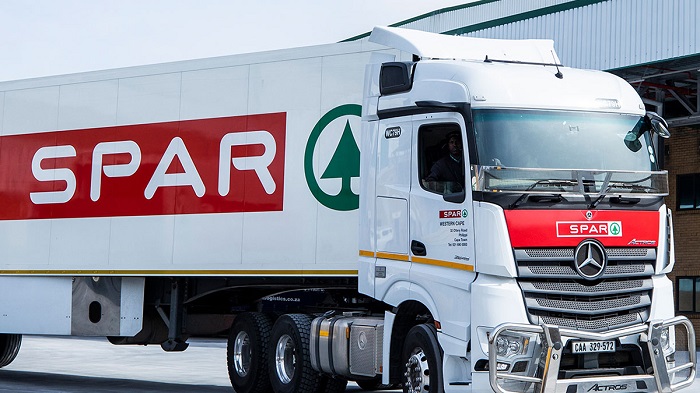
For retailers, logistics has evolved from a back-office function to a competitive differentiator. The winners will be those who use data and technology not just to deliver products, but to deliver predictability, speed, and trust.
Resilience as a competitive advantage
The past few years have tested every supply chain worldwide. Load-shedding, water shortages, fuel volatility, and global disruptions have forced South African retailers to rethink what resilience truly means.
At SPAR, those lessons have become the blueprint for our next-generation logistics model, one designed for agility. Whether it’s rerouting deliveries during power cuts, providing water to drought-affected communities, or mobilising trucks during national crises, our logistics teams have learned that flexibility is the heartbeat of reliability. We no longer plan for “what if.” We plan for “when.”
Technology is the new engine room
The logistics transformation at SPAR is as much digital as it is physical. From forecasting and route optimisation to warehouse automation and last-mile delivery, technology is moving the efficiency needle faster than ever before.
We’re deploying predictive analytics to improve accuracy in demand forecasting and replenishment. Real-time route optimisation tools cut kilometres travelled and fuel burned. Inside our distribution centres, automation and AI-driven dashboards are speeding up throughput, reducing handling costs, and enhancing visibility across every product movement.
Our most significant project, the integration of a new tech system across our national network, is redefining how information flows through the business. The next distribution centre, in the Eastern Cape, goes live in July 2026. Each subsequent rollout brings us closer to a fully connected logistics ecosystem where pricing, stock, and subsidy data are visible instantly to buyers, warehouse teams, and retailers alike.
Crucially, this is not an IT project, it’s a business transformation project. Logistics sits at the centre of that change, ensuring data accuracy, product master-file integrity, and practical training through our “playpen” innovation model, where teams test new systems in real-time environments before full rollout.
A model built for the group and the community
SPAR’s logistics model is distinctive as it serves both the Group and independent retailers across South Africa’s diverse communities. Alignment between national priorities and local realities is essential.
That means responding when communities need us most, whether delivering water to drought-hit regions or moving donated goods to crisis zones. During COVID-19, our trucks reached every corner of the country. That same spirit of responsiveness defines how we approach every logistical challenge today.
This agility extends to our retailer partnerships. Each store may be independently owned, but they share a common logistics backbone, one that thrives on transparency, data sharing, and mutual trust.
Data: From insight to foresight
The smartest logistics decisions are now made in milliseconds. Data analytics is helping SPAR make faster, smarter, and more transparent decisions, whether it’s optimising inventory, managing fuel consumption, or predicting maintenance needs.
Integrated dashboards allow teams to view multiple reports in a single window. Artificial intelligence analyses trends across procurement, transport, and warehouse functions, freeing up human talent to focus on innovation rather than administration.
The outcome is not only efficiency but it’s also visibility. Every link in the chain sees the same truth, in real time.
Enabling local suppliers, strengthening national reach
A core part of SPAR’s logistics ecosystem is its ability to connect local suppliers with national markets. Efficient distribution centres and digital traceability allow small producers to scale sustainably, meeting national demand without compromising on quality or timing.
This “local-to-national” flow strengthens South Africa’s food security while driving inclusive economic growth - proof that logistics can be both efficient and equitable.
The future of retail logistics: Smarter, faster, more circular
Globally, the next decade of retail logistics will be defined by automation, localisation, circularity, and digital traceability. At SPAR, we see opportunity in all four.
Automation will continue to reduce waste and cost. Localisation - through micro-distribution and regional hubs - will bring goods closer to communities. Circular logistics will make reverse supply chains a norm, not a novelty. And traceability, powered by blockchain and AI, will make the entire value chain more transparent, from farm to fork.
We’re also exploring smarter delivery windows - extending into late-night operations to cut congestion and fuel usage, while accelerating cash flow between suppliers, retailers, and consumers.
Change, led by people
Technology may drive the transformation, but people sustain it. Our change-management process begins with practical, hands-on training to ensure that every warehouse operator, driver, and planner can use new systems confidently.
The goal isn’t to replace experience with software, it’s to amplify it. The more intuitive our systems become, the more empowered our teams will be to innovate on the ground.
Reimagining the road ahead
If we could reimagine retail logistics for the next decade, it would be a world of connected systems, extended delivery windows, and zero-friction collaboration between partners. Systems would be intuitive. Data would be instantaneous. Every store, regardless of size or location, would have access to the same level of insight and efficiency.
That’s the future SPAR is building - one network, flexible warehousing, one data point at a time.

Arno Haigh, National Logistics Executive, The SPAR Group